

Transborder Workers’ Relief: living in Ireland, working in Northern Ireland
If you live in the Republic of Ireland and commute to work in Northern Ireland, paying UK tax does not automatically settle your Irish tax position. Transborder Workers’ Relief can reduce the Irish income tax due on qualifying employment income. If that is your only income, it can bring your Irish income tax bill to zero.
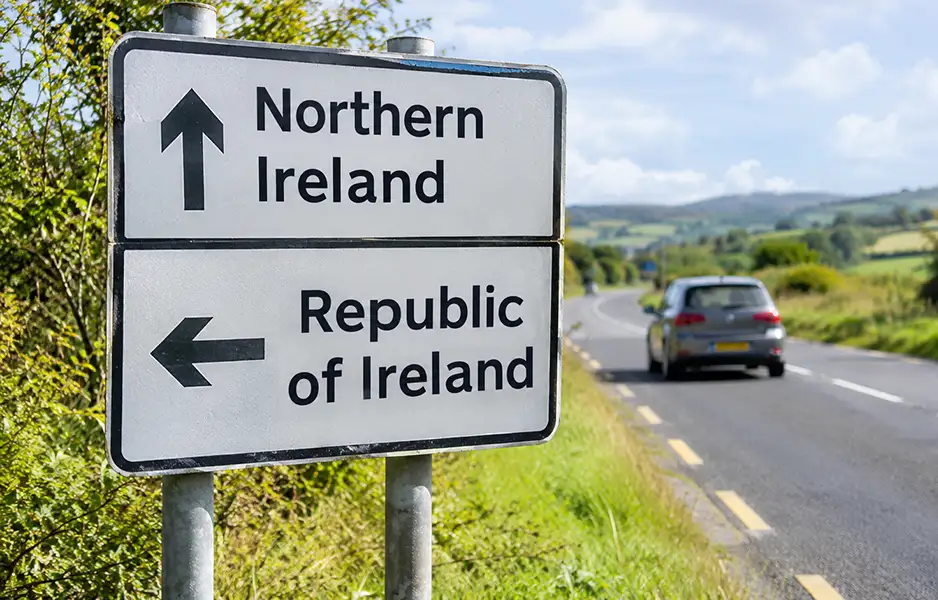
The conditions matter, particularly if you work from home. Here’s what to check before claiming the relief or agreeing a new working pattern.
Who can claim Transborder Workers' Relief?
The relief is for people who are tax resident in Ireland and work outside Ireland in a country covered by an Irish double taxation agreement, including the UK.
The main conditions are
- You hold the qualifying employment for at least 13 consecutive weeks within the tax year.
- You pay tax on the employment income in the other country, and that tax is not refundable.
- You are present in Ireland for at least part of one day in every week in which you work abroad.
- You perform the duties of the employment outside Ireland, apart from duties that are merely incidental to the work abroad.
There are exclusions. For example, the relief is unavailable if you or your spouse or civil partner are proprietary directors of the company paying you. It also cannot be combined with certain other reliefs or treatments, including split-year treatment, the Foreign Earnings Deduction and Seafarers’ Allowance. Check Revenue's eligibility guidance and the full conditions if any of these apply to you.
This is an Irish relief. It does not apply in reverse to someone living in Northern Ireland and commuting to work in Ireland.
What does the relief actually save?
The relief reduces your overall Irish income tax liability through a calculation that takes account of your foreign employment income and any other income. It is not simply a tax credit taken off your UK payslip.
If the qualifying employment is your only income, the Irish income tax liability can be nil. If you also have income such as rent or a second job, Irish tax can still be due. Revenue explains the calculation here.
USC does not apply to the income covered by the relief. Jointly assessed couples should also check how their credits and rate bands are allocated: relief on one person’s foreign earnings does not necessarily mean there is no further tax to pay on the couple’s combined income. These points are covered in Revenue's detailed guidance.
Can I work from home in Ireland and keep the relief?
Regularly doing your normal job from home in Ireland can mean losing the relief for the tax year. Revenue gives an example of an employee working abroad Monday to Thursday and doing the same work from home in Ireland every Friday. That employee does not qualify.
There is a limited allowance for duties that are merely incidental to the overseas work. This depends on what you do, not simply how quickly you do it. A short email carrying out your core job is not automatically exempt. Keep records of any work done in Ireland and check the position before changing your routine. See Revenue's guidance on duties performed in Ireland.
The practical question is: what happens to your annual take-home pay if you add a day at home? Ask for that calculation before agreeing the arrangement. Our cross-border remote-working guide explains the employer’s payroll responsibilities too.
How do I claim it?
Revenue allows you to apply in writing with a final statement of your foreign income tax liability, or claim through an income tax return.
The relief does not remove your obligation to declare foreign employment income. Check the return and registration requirements for your circumstances; a Form 11 under self-assessment will commonly be needed. A written relief application does not replace a tax return you are otherwise required to file.
Before preparing a claim, gather:
- Your payslips and UK year-end pay and tax statements.
- Confirmation of the final UK tax due, including any refunds.
- Your employer’s details and relevant tax references.
- Your employment start and end dates, if applicable.
- A record of where you worked, including home-working days and business trips.
- Details of other income and, where relevant, your spouse’s or civil partner’s income.
Keep the two tax years separate. Ireland’s tax year runs from 1 January to 31 December; the UK’s runs from 6 April to 5 April. One UK P60 will not, by itself, give you the figures for the corresponding Irish calendar year.
If you are filing a 2025 Form 11 in 2026, the standard deadline is 31 October 2026. The ROS extension is 18 November 2026, provided you meet the online pay-and-file conditions. Check Revenue's filing guidance for the applicable deadline.
What if I missed a claim or do not qualify?
For a missed refund claim, check the year straight away. Revenue generally applies a four-year time limit: a refund claim for 2022 must reach Revenue by 31 December 2026. Meeting the conditions in a later year does not establish eligibility for an earlier one. See Revenue’s four-year rule.
If you do not qualify for Transborder Workers' Relief, double taxation relief may still give credit for qualifying, non-refundable UK tax. An Irish balance may remain. The result depends on your earnings, other income and available credits, so do not rely on a general comparison between Irish and UK tax rates.
Get the claim checked before you submit it
If you would like help understanding your cross-border tax position, contact Small Business Payroll or call 01 234 3788. Tell us where you live, where you work and whether you work from home so we can discuss the support you need.
General information for cross-border employees. Individual circumstances, including residence and domicile, can change the result.